Severus Snape’s Magical Bookshelf

This year marks the 20th anniversary of the series which brought a new generation to the joys of reading and made YA Lit “A Thing” enjoyable by teens and adults. There are really a ton of great characters to choose from, but I wanted to focus today on Severus Snape, the deliciously antagonistic Potions Master of Hogwarts. His story is about the redemptive power of love and forgiveness. More than just a robe-billowing villain, he is a more complex and heroic character by the end of the series.

  • Snape falls in love with Harry’s mother, Lilly, but she falls for the arrogant James Potter. The pair remain friends, but their relationship is marred by his attraction to the Dark Arts. When He Who Must Not Be Named plans to kill young Harry in his bid for ultimate power, Snape changes sides and tries to save the Potters. But he is too late to save Lilly. In order to make up for the loss of his love, he vows to protect the boy for his mother’s sake. He is very much in the vein of 18th century heroes  and his interest potions feel like the age of enlightenment.

    Rowling does an excellent job of concealing Snape’s motives, withholding that elusive backstory until the final book for all but actor Alan Rickman. In the penultimate book, Snape takes an action that betrays Harry and the cause of the Order seemingly fulfilling every suspicion Harry and friends had about Snape. Only at the end when he makes his final stand and reveals his true motivations does he become redeemed in the eyes of the audience and Harry who has named one of his sons after him

    The poignancy of Snape’s character is heightened now by the recent death of Rickman who helped to give the role so much severity and heartbreak in the movies. Do we love Snape? Always.

             
    Other Resources
  • Dear Mr Potter Podcast
  • Potttermore
  • Harry Potter Wiki
  • British Library Exhibit
 

Anchor Scenes: Moonstruck

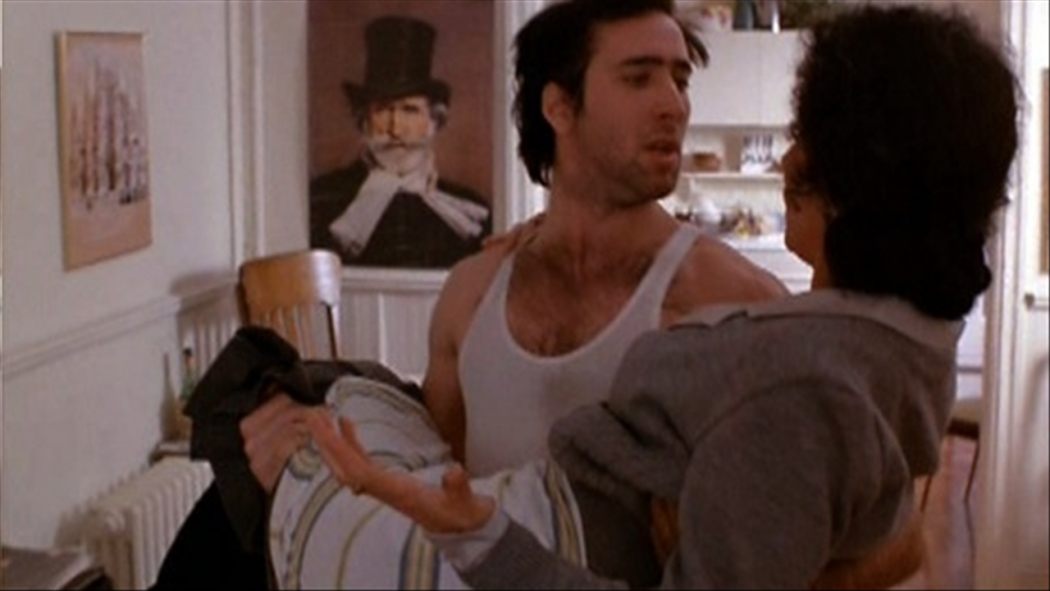
Last week, I wrote about the seven anchor scenes. This week, I thought I would try the exercise of mapping the scenes to a movie. Moonstruck 1987

Image result for moonstruck

The inciting incident. Loretta is engaged to Johnny. Johnny is leaving for Sicily to be with his dying mother and tell her of their engagement. He asks her to invite his estranged brother Ronny to the wedding.

Image result for moonstruck

Acceptance. Johnny calls and reminds her of her promise. Loretta calls the brother and he hangs up on her. Determined to fulfill her promise, she goes to the bakery to see Ronny in person.

Midpoint reversal. Ronny tells her of the bad blood between him and Johnny, why he can’t go to the wedding. They sleep together.

Image result for moonstruck movie

Point of no return. Ronny confesses that he loves her. She tells him not to come to the wedding. He agrees if she will come to the opera with him.

Image result for moonstruck movie

Dark moment. Loretta meets Ronny at the opera and gets caught up in the romance. Afterwards, he appeals to her feelings for him and they sleep together again.

Climax. Loretta returns home and her mom tells her that Johnny is back from Sicily and is coming to see her. Ronny arrives to meet her family and stays for breakfast while they wait for Johnny. Johnny comes back to the house. He tells Loretta that he must break their engagement.

Image result for moonstruck movie

Resolution. Ronny asks her to marry him and she says yes. Johnny is brought into the family.

Image result for moonstruck movie

Review: The Art of French Kissing by Brianna Shrum

I received a free copy of this title in exchange for my honest review.

The Art of French Kissing

Carter dreams of being a chef and applies to a competition for a scholarship in Savannah where she meets a group of talented young cooks and the cocky Reid Yamada. The problem is, Reid’s good looks and wise cracks make Carter want to punch him. Or kiss him. During the first competition, Reid hides an essential ingredient from her, starting a game of sabotage and revenge. Just as things are going too far, the nature of the competition changes and Carter and Reid are forced to work together as partners.

The conflict and romance are tightly woven together and while they come to an obvious conclusion, it is still a fun ride. The dialogue is realistic and will appeal to teens. While the pop culture references could be dated in a few years, they will still appeal to fans of this type of book.

Carter is a flawed heroine and sometimes does or says things that are monumentally stupid that would not fly in real life. But the heightened nature of this genre allows for some dramatics. Overall, I enjoyed this YA romance as a nerd and a foodie.

Look for The Art of French Kissing in June 2018. #TheArtOfFrenchKissing #NetGalley

Hercule Poirot’s Belgian Bookshelf

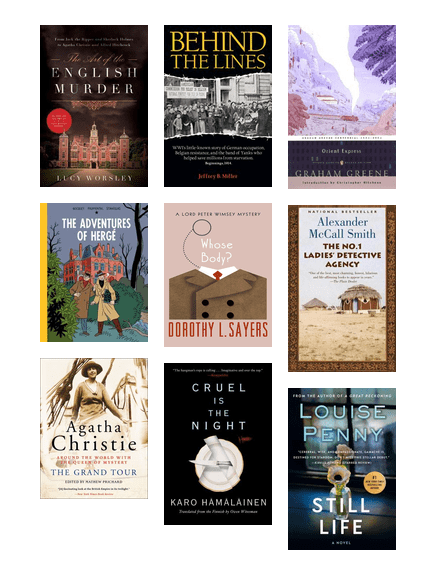
Hercule Poirot is one of the most famous and most long-lived of Agatha Christie’s detectives with over thirty books in his name from 1920-1975. His adventures cover the golden age or cozy mysteries (taking place between the World Wars, often in the English countryside).

Image result for murder on the orient express

The diminutive Belgian’s most distinguishing features are a waxed mustache, an egg-shaped head, and a fastidious appearance. He began his career as a policeman before immigrating to England and becoming a private detective . He relies on logic and the powers of his mind’s ‘little grey cells’ to help him solve cases. Christie drew the character in the tradition of the eccentric detectives of Arthur Conan Doyle and Edgar Allen Poe.

As proof of his continued popularity, Poirot has been portrayed many times in radio, tv and film; most famously by David Suchet in the long-running television series. A new star-studded adaptation of the classic Murder on the Orient Express is being released in the theaters this month starring Kenneth Branagh as Poirot as he takes on one of his most well-known cases. Here are a few titles you might find on his bookshelf.

Other resources:

Agatha Christie Wiki

Agatha Christie Limited

Writing Wednesday

One of the things I have been struggling with in my writing is structure. It is the building block upon which your story rests. We have the standard three-act structure we learned about in school; it is a natural instinct in story-telling. The thing is learning how it works and how to develop it so that you can tell the story you want to tell.

One of the most succinct and structure concepts I have seen is the Seven Anchor Scenes which describe the arc of your story through seven big moments. While not all stories will have these exact scenes, it is at least good to understand the basic structure and how it functions before you deviate. A fun exercise can be to try to pick out the anchor scenes from your favorite stories but I think it works best as a discussion with someone else to bounce ideas off. It can take some time for all of it to become second nature; I am still wrestling with it. Take a listen to the episode of the How Story Works Podcast by Chipperish Media.

1.Inciting Incident. The event that begins the story.

2.Acceptance. Something about the situation is different and things must change.

3.Midpoint Reversal. A big discovery is made that changes the game and causes a major defeat.

4.Point of No Return. The nature of the enemy is known and the fight is increased.

5.Dark Moment. There is no hope.

6.Climax. Everything the character has gone through comes into focus and the conflict is resolved win or lose.

7.Resolution. Order is restored and the world is different.

I have gone back to my structure many times, trying to fit disparate elements into the seven anchor scenes with no real idea how they should all work together. I have pared my plot down to the arc of my male and female protagonist, cutting out some of the extra stuff diluting the story. Beyond ‘this happens and then this happens’, I am trying to unpick why things happen and how the characters react to lead the the next big moment. For someone who has generally been a “pantser” (someone who goes on pure instinct alone with no planning), this is not an easy prospect.

Review: Intertwine by Nicole Van

Intertwine (House of Oak, #1)

After devouring the Outlander series, I have been drawn to time travel romance. There is much to like about this book and much that could have been better. Emme finds an old locket with the portrait of a man and feels drawn to him. She is a magnate for disaster, especially while travelling. James dreams of a life of adventure, but he is set to inherit his family estate. Both characters are interestingly drawn and fit well together; their interactions draw the reader in. The side characters are also interesting.

On a research trip to England, she is transported via a mystical storm to the 19th century. Inevitably, she meets her mystery man, but she has no memory. While this plot point helped to cure some of the fish out of water ridiculousness that usually befalls such books, she spends a long time not remembering and nothing else much happens plotwise besides Emme and James falling in love.

I don’t mind the inevitability of a romance–a little destiny can be an interesting driving force, but the overall feeling here is blandness. Many opportunities for conflict are easily resolved or simply ignored. For instance, the climax of the book could have generated some interesting tension if the author had chosen to follow James and heightened the uncertainty of what happened and how they could be reunited.

Overall, this is a sweet romance with interesting characters. Like the cross-time Pink Carnation series, the House of Oak series covers the stories of the supporting cast introduced in this volume.

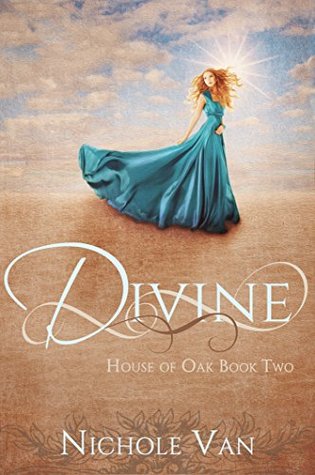
Divine (House of Oak, #2)

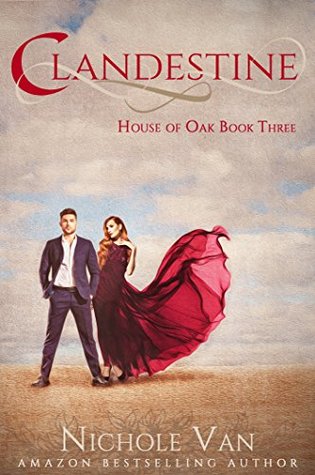
Clandestine (House of Oak, #3)

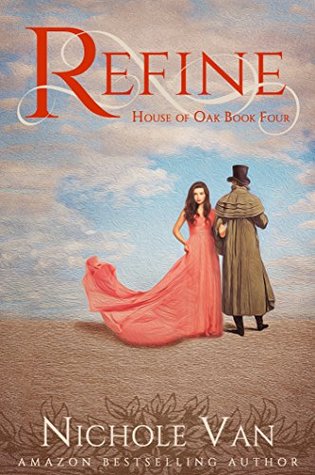
Refine (House of Oak, #4) Outshine (House of Oak #5)

Alexander Hamilton’s Revolutionary Bookshelf

I started a series called From the Protagonist’s Bookshelf for Austin Public Library two years ago. I am hoping to expand that series here. Enjoy!

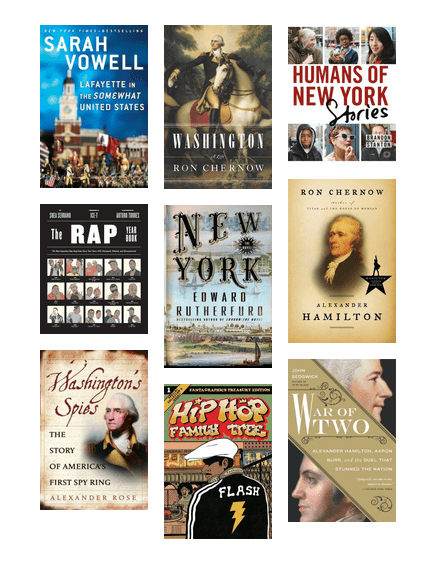
Alexander Hamilton rose from obscure beginnings to become George Washington’s military aid during the American Revolution as well as the first Secretary of the Treasury. He wrote extensively in defense of the Constitution. His most famous or infamous exploit is the duel he had with then Vice President Aaron Burr . In the wake of the immense popularity of the musical, New York Public Library mounted an exhibition of documents housed in their collections: Alexander Hamilton: Striver, Statesman, Scoundrel

Lin Manuel Miranda has commented that there is enough fascinating material in Hamilton’s life to make several musicals. The story related to the role of immigrants in the founding of American culture and Hamilton’s drive spoke to the themes of rap culture. This inspired Miranda to write in the voice of hip hop and find a cast of America now to tell the story of America then. PBS recently aired a documentary on Hamilton’s life and the creation of the musical. The musical resonates with themes of opportunity and legacy. Miranda won the Pulitzer Prize for drama in 2016 as well as multiple Tonys. Republicans and Democrats both sides agree that Hamilton is an amazing piece of modern American theater.

Here are a few titles you might find on A. Ham’s bookshelf.

Other resources:

Turn: Washington’s Spies 2014-17

Hamilton, An American Musical Reading List

The Get Down 2016

Writing Wednesday

As I mentioned in a previous post I began writing through play by email games. The idea is simple, take a standard role-playing game but players exchange their actions and outcomes by exchanging emails. Usually, we would write out a scene or part of a scene from the perspective of our character and end at the point of some response for the other character to take up.

For ten years, I told stories in this fashion, but I never considered the art of storytelling or improving my skills beyond the mere act of writing every day. Most role-playing books address the basic concepts but it is a different beast sitting around in the moment collaborating in-person with your friends to face a computer screen by yourself. Over time, I developed instincts in storytelling that people seemed to enjoy.

For inspiration, I turned to the books and films that I liked and thought of similar things that could happen in my stories–Jane Austen, Hornblower, Aubrey and Maturin, etc. Through the offerings of my partners, other ideas suggested themselves. The possibilities were endless.

While we were telling stories, when I looked at what we had written, there was no structure. It did not read like a novel. Since I began learning in earnest, I have been trying to apply structure to my story.


I got nothing

Well, that happened fast. Last week, I had a technical glitch and my Monday post did not go out as I thought it had. I was so jazzed, I had some great posts on deck for Valentine’s week, but then I started to think about what I would do for this week and I couldn’t come up with any good ideas. I wanted to be smart and funny and thoughtful, but I got nothing.

So, I’m going to write about having nothing.

Part of it is that I am still getting used to blogging and balancing that with working on the novel. The other part is coming up with the topics and what to say. Sometimes life just happens. We stumble, we fall. Hopefully we move on.

The advice is always the same though, keep plugging away. So I am here plugging away. I might need to cut back from time to time to posting here twice a week. I want to finish this draft of my book and no matter how long I leave it, little elves are not going to write it for me.

The Most Romantic Books I Ever Read

Dragonfly in Amber (Outlander, #2) Dragonfly In Amber by Diana Gabaldon. I think that this book is the strongest in the series. From the beginning of the book, the reader knows that our couple will end up separated. The momentum of the complex plot carries you forward to the inevitable conclusion but the strength of the characterizations and the complications of the narrative left me devastated and desperate for more. Plus, Jamie Fraser is the king of men.

The Forgotten Room The Forgotten Room by Karen White, Beatriz Williams and Lauren Willig. After the generations of men and women, drawn to this room across different time periods, it is satisfying to see them finally get the happily ever after through their great-grandchildren.

That Summer That Summer by Lauren Willig. An unhappily married woman meets an artist of the Pre-Raphaelite Movement who draws out her beauty and passion. When the two are about to go take their happily ever after, fate intervenes to drive them apart.

A Room with a View A Room With A View by E.M. Forster. An Edwardian woman travels to Italy and meets an unconventional man who shows her passion. The beautiful setting of Florence doesn’t hurt either.

A Tale of Two Cities A Tale of Two Cities by Charles Dickens. Sidney is a rogue until he falls in love, but she is in love with someone else. In order to protect her, Sidney makes the ultimate sacrifice for the woman he loves, wanting to see her happy, even if it is not with him.

Persuasion Persuasion by Jane Austen. Ann turned down her chance at love with a poor but promising naval officer. Years later he returns as a rich man and they discover that their love endures with the hope of a second chance.

What are the most romantic books you ever read?