Book Club: The Summer Before the War by Helen Simonson

The Summer Before the War

Three weeks ago our book club met to discuss The Summer Before the War by Helen Simonson. The story follows a group of characters from a real English village in the summer of 1914. The book is heavily marketed for fans of Downton Abbey and we discussed why these types of stories appeal so much to American audiences. The first world war really set the stage for the world as we know it today with the rise of women’s rights and geographic borders. With the recent centenary interest in the war, there is a certain nostalgia for a time in not too distant memory when things were so completely different; from an old aristocratic society to the mechanics and understanding of war. Plus, they give us interesting characters with the appropriate mix of modern sensibility and commentary on Edwardian society.

Image result for rye england

We discussed the gulf in the novel between the naive, small town village plot with its touches of humor and the brutal, cruelty of the war. This gulf was further emphasized by a slow pace and stereotyped characters that I found difficult to care about though there were notable exceptions of Aunt Agatha, Daniel and Celeste who all showed spirit and strength. While there was nothing new here for a history enthusiast like me to learn in this treatment, I did appreciate the similarities I had seen in references to the experience of the war in America.
National WWI Museum

Minnesota History Center

The American Experience: The Great War

Book Club: Persuasion by Jane Austen

Last month, our book club met to discuss Jane Austen’s Persuasion. The book was written while the author’s health was in decline and people have speculated about the more poignant nature of whether Austen instilled her own personal regrets in this story of lost love and second chances. We talked about her youthful attachments and brief engagement and while we will never be able to say for certain that she regretted her life choices, there is a humanity to Anne’s history that is appealing.

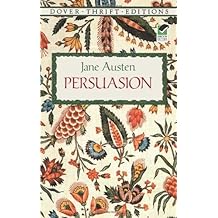
Persuasion  Persuasion (Dover Thrift Editions) by Jane Austen published by Dover Publications (1997)

The question at the heart of the book is whether Anne got bad advice when she broke her engagement eight years previously. While the end result proves that our pair should be together, there were good reasons aside from wealth and class for her to have declined his offer. Wentworth is fighting a war and might not come back; even if he survives, he might not be lucky enough to earn prize money for taking French ships (the way sailors gained their fortunes at the time). Given the uncertainty of that future, it is not completely unreasonable for her friends to advise her to decline such a proposal.

One of the themes discussed in this book is class and status. Sir Walter is a pompous fool, obsessed with status when his actual status as a baronet marks him as the lowest rank of the noble classes. Austen’s works continually recall this theme with characters such as Lady Catherine and Mrs Ferrars who pursue status at the expense of happiness and worth. The war with Napoleon provided many opportunities for men like Wentworth to rise through the ranks on their own merit instead of being only available to the wealthy and noble. Austen’s own brothers Francis and Charles were sailors and reached the height of their profession.

Image result for francis austen  Image result for francis austen

We talked about our protagonist couple and whether they are likable people. Like Fanny Price, Anne is often meek and too good for words. She is at her best when she pokes against the pomposity of those around her. I was sympathetic to Anne because I was easily persuaded as a child; I found it difficult to form opinions and express them. Wentworth is brave and romantic, but some in our group questioned his motives before his reunion with Anne. He claims that he had no notion of his affect on Louisa Musgrove, but we all agreed that he must have had at least some idea, mostly subconsciously, that he was pursuing the younger woman to get back at Anne.

As one of the least known of Jane Austen’s work, I thought that Persuasion would be a great choice for our book club discussion. We ended up talking for an extra half-hour, it was awesome!

Jane Austen’s House Museum

Jane Austen Society of North America

What Jane Austen

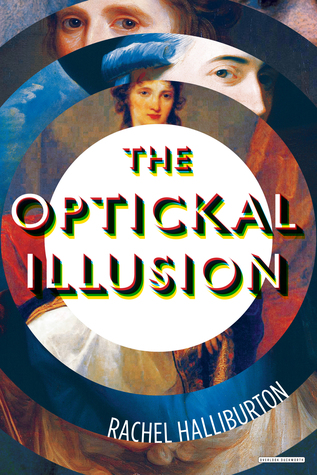
Book Review: Optikal Illusion by Rachel Halliburton

I received an advance copy of this book from NetGalley in exchange for my honest review.

The Optickal Illusion by Rachel Halliburton

This is a really interesting book based on a true story in the artistic community of 18th century London. The author does a good job of laying the groundwork for the mystery of the story, concealing motives and placing the reader at unease. At first, I was confused with the jumble of characters and trying to keep track of the plot; there was some playing with the timeline that helped to contribute to this confusion as well, but it was born out by the climax.

Each of the characters are involved in some way in a deception or optical illusion. Optical illusion is also at the heart of what a painting is as well as the idea of the manuscript that would allow the artists to mimic the techniques of Titian. It was very satisfying to see all of these elements to come together in an interesting way.

As an art history major, I enjoyed seeing the descriptions of painting techniques and the use of the familiar figure of Benjamin West. However, it is not necessary to have an art background in order to understand this book.

Single and Still Fabulous: 20 Years of Sex and the City

This month marks the 20th anniversary of the hit comedy program Sex and the City. Known for its frank discussion of relationships from a female perspective, the show also featured fantastical fashion and trendy New York locations. The show won numerous awards and has spawned two feature films and a series of prequel books about Carrie as a teenager. Episodes were themed around questions Carrie proposed in her writing and informed by the events in the women’s lives.
The original novel by Candace Bushnell has a different tone from the series, but many of the scenarios can be found in season one of the series. Sex and the City and similar books from the mid-1990s inspired the genre of chick lit where the heroines sport designer shoes and drink cocktails. These books are usually lighthearted in nature and focus as much on friend and family relationships as on romantic entanglements. In celebration of all things single and fabulous, here are some more titles to inspire you:

America’s Great Read: Little Women

Little Women explores the lives of four sisters growing up during the American Civil War. It is an American classic. Author Louisa May Alcott based the March sisters on her own sisters and the transcendentalist philosophies shared by her parents also runs through the novel. My Mom read it to me for the first time from a beautiful illustrated edition that I still have on my bookshelf.

No automatic alt text available.  No automatic alt text available.

I never had sisters, but when I read this book, I felt like I did. I wanted to be good like Meg, fierce like Jo, kind like Beth, and artistic like Amy. I always loved their play life too–the Pickwick Society and the melodramatic plays they put on with the costumes.  Mom always saw me as being like Amy–I loved to draw, I was a little dramatic, I used words wrong. But I think I have been each of them at various points in my life and I guess that is true of most of us and part of the genius of Alcott’s work.

As a girl, I didn’t think about the feminism of this book, but as an adult, I know how extraordinary it was for that time period to feature four realistic girls in a supportive environment. The recent adaptation really highlights the individuality and realism of each of the girls. It is about growing up and learning how to be your best self. There are many great moments that have stayed with me through the years; shared by the countless generations of girls before and since who have read the book.

Vote for your favorites at PBS America’s Great Read

Book Review: The Flames of Florence by Donna Russo Morin

I received a free copy of this title in exchange for my honest review.

The Flames Of Florence (Da Vinci's Disciples #3)

I didn’t realize when I had requested this title that it was part of a series but I was intrigued by the idea of a secret group of women artists in Florence during the time of the Bonfire of the Vanities. The author assumes that readers are already familiar with the characters and their history, so she spends little time on providing any depth or space in which to know them. I felt like had stumbled on to the season finale of a show and had no reason to care about what was happening. I also felt like the conflict wasn’t personal for the characters; most things happened outside the scope of their purview and the couple of times when they were most “in danger”, they got out of it very quickly and with no consequences. Given the setting, I personally expected higher stakes, but this may appeal for readers looking for more gentle treatment.

However, I could see that the author spent a lot of care on research and creating the setting and with my background in art history I enjoyed the mentions of art and artists I was familiar with. I would recommend this title for people who had read the previous books in the series, but I don’t think it stands enough on its own merit.

If you love Jane Austen

Jane Austen lived at the forefront of the modern novel, but she was not the first female novelist. Fanny Burney, aka Madame D’Arbley, was a favorite of Austen’s and had a fascinating life. Like Austen, Burney wrote about Georgian society and the plight of women.


Austen’s contemporaries include Maria Edgeworth, Charlotte Lennox, Anne Radcliffe, and a little known manuscript written by Georgiana Duchess of Devonshire. Marking the end of the Georgian and Regency periods is Elizabeth Gaskell, a contemporary of the Bronte sisters who retains the humorous depiction of English society.


The foremost Austenesque author in the modern age is Georgette Heyer, mother of the Regency Romance. While the genre has achieved a bad reputation as silly bodice rippers, Heyer’s books are full of biting social humor and cram-packed with period slang as are Lucinda Brant and Jude Morgan’s works.


Austen’s heroines are notoriously steeped in the domestic world, but the ladies of Anna Elliott and Lauren Willig help in the war effort while looking for their perfect match. These authors take Austen’s wit and social satire and transpose it into a light and modern prose style.


If Jane Austen had written about magic, the Napoleonic war at sea, or solved mysteries, it would look like Susanna Clarke, Patrick O’Brian and Stephanie Barron. These modern authors do an excellent job in evoking Austen’s tone and style in new genres.


There are numerous books speculating on the lost corners of Austen’s life as well as continuations and alternate depictions of her work. These are ranged with various degrees of success, but these are fine examples that offer interesting perspectives on Austen’s legacy.

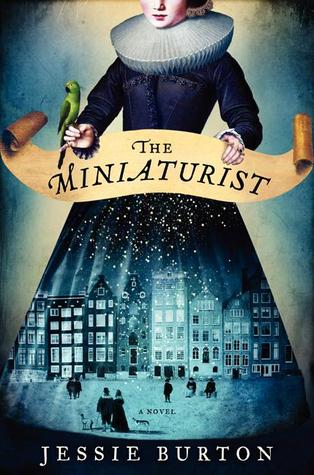
Book Club: The Miniaturist by Jessie Burton

The Miniaturist   Image result for dutch still life

On Wednesday, I lead a book club discussion on The Miniaturist by Jessie Burton. It is a strange and haunting tale and I really enjoyed reading it. We talked about the claustrophobic feel of the book with the concentration on the house and the miniatures and the slow pace. Some felt that the slow pace and abrupt ending were off-putting, but they also contributed to the overall feel of unease throughout the novel. We talked about 16th century Amsterdam and the duality of the conspicuous display of wealth and the austere and the oppressive presence of religion. This duality is also seen in the still life paintings in the house which were popular at the time. Like the Momento Mori art of the Renaissance, Dutch still life paintings focus on the transience of life and material possessions. one of the phrases that runs through the novel is that ‘things can change’–circumstances, fortunes, life.

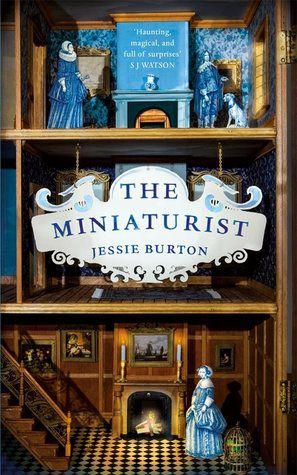
The Miniaturist    Image result for nella oortman dollhouse

The miniature cabinet is based on a real cabinet in the Rijkesmuseum in Amsterdam. Miniature cabinets were not children’s toys but showpieces for wealthy women. Nella is given the cabinet to play house, another aspect of her childish nature. She is contrasted with the dour and strict, Marin, who plays herself with the collection of curiosities from her brother’s travels and studying the world of business. When all the secrets are revealed, Nella has grown into an independent woman poised to shape her future and that of her household.

We talked about who the miniaturist is and what her role is in the novel but the powerful nature of the miniaturist is never fully explored. She tells Nella through her notes that she should be the architect of her own fate while giving clues as to what is happening around her. Throughout the novel it is unclear whether the miniaturist is acting benevolently or not. When Nella goes into the shop towards the end of the book, she finds half finished miniatures related to the citizens of the city which only leaves more questions as to how and why she is doing what she is doing. Obviously the point of the story is the agency of Nella and the conflict between her, Brandt’s household and Dutch society. But the use of the Minaturist is treated with the same abruptness as the rest of the novel.

Despite the minor issues with the book, I still liked the setting, characters and story.

Books I Wish I Had When I Was a Kid

I am a history nerd; always have been. Growing up, I devoured the Little House, Betsey-Tacy and Anne of Green Gables series over, and over and over again. I loved the descriptions of the food and the clothes and I was fascinated with the idea of how special the simple things were in a time of hard work and fewer opportunities. Waking up on Christmas morning to your own shiny tin mug and a heart-shaped white cake, or making a writing desk out of your uncle’s old theatrical trunk sounded magical. When I started working at the library, I started to see all of the fantastic new historical series for kids that had emerged in the last two decades and I knew I would have loved them.

The Little House series has expanded to include the stories of Laura’s family–from Rose to her great-grandmother, as well as the missing stories between Plum Creek and Silver Lake and Mary in college.

The Dear America series is the imagined diaries of girls during different points of American history.

The American Girl series follows along the same lines as Dear America, but AG expands each girl’s stories into their own series. I don’t think I would have been into the actual dolls–too babydoll-ish, but I love the historical costume details. The series has expanded and re-invented itself.

  •             

    Carolyn Meyer is the queen of YA royalty historical fiction, contributing to the Royal Diaries series (below) and her own series. Focusing on queens in different periods and countries, both series mirror the deeper appreciation of world history with the heightened emotion of YA fiction.

Review: How to Stop Time

I received a free copy of this book in exchange for my honest review.

How to Stop Time by Matt Haig

I was expecting an adventurous romp through time, but that is not what this story is about. Unfortunately, I started this book, but then had a couple of holds come in and inherited the running of a book club. So, I had four books to read while I read this one; my attention was a little divided. I read in hour drabs over the space of a few weeks, but still I never felt engaged with the plot or characters until the end.

Yes, part of that was my state of focus, but the other part was the slow burn of the plot with frequent interruptions of the narrative to engage in historical tourism as we discover elements of the protagonist’s past. Add to that my expectations, and I felt disappointed. Tom, our protagonist, spent most of the book either too afraid to live or ready to tell everyone about his immortality. I get that the point was the worth of the risk we must all take to live and love, but the extreme of telling everyone just didn’t make sense to me.

That said, the last quarter of the book was much more engaging as the various threads of narrative came together in some fun ways. All of a sudden, I was interested in what was happening. I wish I could have felt the same through the whole book.